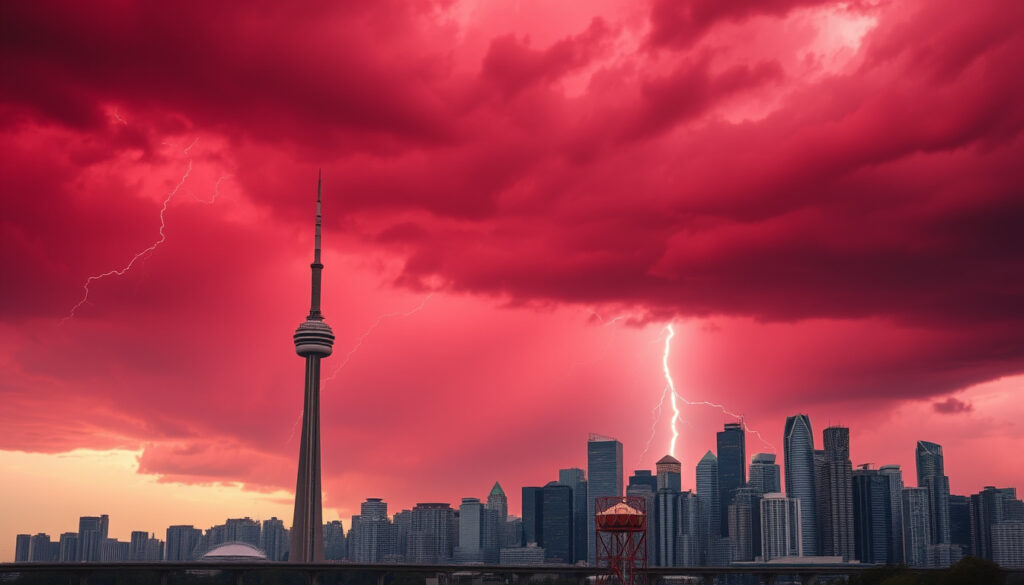
Toronto Red Weather Warning: Meaning, Impacts & Safety Guide
Red weather warnings mean extreme, life-threatening conditions with widespread damage and prolonged outages — not a drill. This guide breaks down Canada’s colour-coded alert system, what a red warning signals, and exactly what Toronto residents should do when one lands.
Highest Severity Level: Red Warning · Issuing Authority: Environment Canada · Potential Impacts: Utility outages, structural damage · Current Toronto Risk: Patchy frost advisories · Alert Colors Used: Red, Orange, Yellow
Quick snapshot
- Red is the highest alert level per Canada.ca Official
- Red alerts are rare compared to yellow and orange
- Active tornado warning status for City of Toronto
- Toronto-specific historical red alert frequency
- Colour-coded system launched January 2026
- Rollout began November 2025
- Check Environment Canada alert portal for real-time City of Toronto alerts
- Frost advisories currently active in some areas (Environment Canada alert portal)
The table below summarizes key severity specifications for Canada’s colour-coded weather alert system.
| Label | Value |
|---|---|
| Severity | Extreme (Red) |
| Impacts | Outages, structural damage |
| Source | Environment Canada |
| Toronto Status | Frost advisories active |
| Alert Colours | Yellow, Orange, Red |
| Minimum Advance Notice | 6 hours (up to 24) |
What is a red weather warning in Canada?
A red weather warning is the top tier in Environment Canada’s colour-coded alert system, which officially launched in January 2026 after rollout began in November 2025. The system uses three colours — yellow, orange, and red — to communicate how severe incoming weather will be.
When Environment Canada issues a red alert, it means very dangerous and possibly life-threatening weather will cause extreme damage and disruption. According to the official Canada.ca definition, red alert impacts are extensive, widespread, and prolonged. The colour selection for red requires both extreme impact and very high forecast confidence before meteorologists will escalate to this level.
Red vs other colours
Three distinct alert colours operate alongside the existing warning types (Warnings, Advisories, and Watches):
- Yellow — Hazardous weather may cause damage, disruption, or health impacts. Impacts are moderate, localized, and/or short-term. Yellow alerts are the most common alert level.
- Orange — Severe weather is likely to cause significant damage, disruption, or health impacts. Impacts are major, widespread, and/or may last a few days. Orange alerts are uncommon.
- Red — Very dangerous and possibly life-threatening conditions causing extreme damage and disruption. Red alerts are rare compared to yellow and orange.
The same weather can have different impacts depending on timing, location, and population — which is why Environment Canada evaluates impact severity, not just weather type.
Issuing body
Environment Canada (ECCC) designs, issues, and manages the colour-coded alert system for all of Canada, including Toronto. The Alert Colour Matrix uses four impact levels and four confidence levels to guide forecaster decisions on which colour to assign.
“The highest level when we see a very high risk we would issue a red alert and that means very dangerous and possibly life-threatening weather will cause extreme damage and disruption.”— Environment Canada Official (Government Agency Representative)
The implication: red alerts are not issued casually. Meteorologists reserve this level only when they have strong confidence in catastrophic outcomes.
What happens if there is a red weather warning?
When a red alert is issued, activities should be canceled or postponed immediately and people must take shelter, according to Environment Canada guidance. Red alert response requires immediate action: look for shelter, don’t travel, and follow emergency guidelines strictly.
Expected impacts
The impacts during a red alert are severe and wide-ranging:
- Long duration, widespread utility outages — power may be lost for extended periods
- Structural damage to homes and buildings — roofs, windows, and walls may be compromised
- Significant damage to trees — including orchards, parks, and urban canopy
- High likelihood of injury — from flying or falling debris
Orange and red warnings have high accuracy because meteorologists issue them only when they have strong confidence in dangerous conditions developing. However, some severe weather develops rapidly, giving less than 30 minutes notice — so waiting for a red alert before acting is risky.
Safety actions
Always read the full weather alert text no matter the colour, as it includes actions to keep safe. The colour-coded system prioritizes public safety, meaning some warnings take a cautious approach even when outcomes remain uncertain.
- Cancel or postpone all outdoor activities
- Seek appropriate shelter immediately
- Follow all official safety instructions
- Monitor weather.gc.ca for real-time updates
- Keep emergency supplies accessible
The trade-off: acting early on yellow or orange alerts can prevent situations from escalating to red — but responding to every advisory can feel exhausting. The solution is to understand the colour thresholds so your response matches the actual risk.
Is there a tornado warning for Toronto?
Currently, frost advisories are patchy across the Greater Toronto Area, with no active tornado warning. To check the City of Toronto’s current status, monitor weather.gc.ca — Environment Canada’s official alert portal — which provides real-time alerts for each municipality.
Current alerts
The latest conditions show frost advisories in some areas, not the severe wind or severe summer storms that would typically trigger orange or red warnings. Tornado warnings in Ontario tend to affect areas with specific atmospheric setups — the southern and southwestern regions more frequently than the Toronto core.
Toronto history
Toronto has experienced tornadoes, though significant events are relatively rare compared to surrounding regions. The city’s urban density and lake-moderated climate reduce some tornado risk compared to inland areas further from Lake Ontario.
What this means: if you’re in Toronto and see a red alert, it’s far more likely to involve severe winter weather, extreme wind, or major flooding than a tornado — but you should always verify at weather.gc.ca.
Can I go outside in a red weather warning?
Staying indoors is the standard recommendation during red weather warnings. The alert signals extreme risk with high likelihood of injury from flying or falling debris, so outdoor exposure is genuinely dangerous.
Risks of exposure
- High likelihood of injury from debris
- Structural damage creating falling hazards
- Utility outages affecting building safety systems
- Emergency services may be overwhelmed or delayed
Alternatives
- Work from home if your employer allows
- Postpone non-essential errands
- Use the WeatherCAN mobile app for real-time updates
- Stay tuned to local news for shelter locations if needed
The upshot: for Toronto residents, a red weather warning is not the moment to be outside. Preparation before the alert — having supplies, checking your insurance, knowing your building’s emergency plan — is what makes staying indoors feasible.
Can I travel in a red weather warning?
Avoiding travel during a red weather warning is strongly advised. Red warning wind events may result in long duration, widespread utility outages that affect traffic signals and transportation infrastructure, making driving hazardous.
Driving insurance
Check your auto insurance policy for severe weather clauses — some policies have exclusions for accidents that occur during officially declared severe weather emergencies. If you must drive after a red warning is lifted, document road conditions thoroughly.
Warnings are usually issued 6 to 24 hours in advance, but some severe weather develops rapidly — giving less than 30 minutes notice. Don’t rely on visual cues alone; check weather.gc.ca regularly.
Alternatives
- Postpone trips until conditions improve
- Consider public transit if available and operational
- Arrange accommodations if you’re already traveling when alert is issued
- Contact your airline or transit provider for delay policies
The implication: for commuters and logistics operators in the Greater Toronto Area, the cost of canceling a trip is almost always less than the cost of an accident, vehicle damage, or being stranded during a prolonged outage.
What the colour levels mean for Toronto residents
The colour-coded alert system gives Toronto residents a quick visual shorthand for risk, but interpretation matters. A yellow alert still demands attention — it’s the most common level and indicates hazardous conditions that can escalate.
- Yellow alerts are the most common level and indicate moderate, localized impacts
- Orange alerts are uncommon but indicate significant disruption expected
- Red alerts are rare and signal life-threatening conditions requiring immediate action
- The three existing alert types (Warnings, Advisories, Watches) remain in place alongside the colours
Why this matters: Environment Canada’s system evaluates impact based on timing, location, and population — so the same storm may receive different colour alerts for different municipalities within the Greater Toronto Area.
“When we issue yellow alerts, it means hazardous weather may cause damage, disruption or health impacts. And when we see higher risk, we’ll escalate it to an orange alert. That means severe weather is likely to cause significant damage, disruption or health impacts.”— Environment Canada Official (Government Agency Representative)
The pattern: forecasters evaluate impact severity rather than weather type alone, which means the same storm can trigger different alert levels across neighbouring areas.
How to prepare before severe weather hits
Preparation steps you can take now, before any alert is active:
- Build an emergency kit — include water, non-perishable food, flashlight, batteries, first aid supplies, and medications for 72 hours
- Download WeatherCAN app — Environment Canada’s official app delivers real-time alerts directly to your phone
- Know your building’s emergency plan — especially important in high-rise condominiums where wind effects amplify
- Review your insurance — check coverage for severe weather damage and understand any exclusions
- Identify backup shelter options — if your home becomes unsafe, know where to go
- Charge devices and power banks — before a storm hits, ensure your phone is fully charged
The pattern: six preparation steps, one shared thread — acting before the alert means you’re not scrambling during it.
Related reading: Yellow Wind Warning Example
Toronto’s red frost warnings echo the urgency seen in the Toronto snow squall warning during rapid winter events, urging similar precautions for travel and outdoor activities.
Frequently asked questions
What are weather warning colours in Canada?
Canada uses three colours: yellow (hazardous weather), orange (severe weather), and red (extreme, life-threatening weather). Each colour is paired with the existing alert types (Warnings, Advisories, Watches) to communicate both the type and severity of incoming weather.
How serious is a red alert?
A red alert is the highest severity level. It signals very dangerous and possibly life-threatening weather that will cause extreme damage and disruption, including widespread utility outages, structural damage, and high likelihood of injury from debris.
What does red warning snowfall mean?
A red warning for snowfall means Environment Canada expects extreme snow impacts — potentially a blizzard or severe accumulation causing major disruption, structural stress from snow load, and transportation paralysis. Immediate action and shelter are required.
What is a yellow warning weather?
A yellow weather warning is the lowest colour tier, indicating hazardous weather that may cause damage, disruption, or health impacts. Impacts are moderate, localized, and/or short-term. Yellow alerts are the most common alert level in Canada.
Has Toronto ever been hit by a tornado?
Toronto has experienced tornadoes, though significant events are relatively rare. The city’s location on Lake Ontario moderates some tornado risk compared to inland areas. For current alerts, check weather.gc.ca — tornado warnings for Toronto are uncommon but not impossible.
What does orange warning snowfall mean?
An orange warning for snowfall indicates severe conditions likely to cause significant damage, disruption, or health impacts. Orange alert snowfall events may be major, widespread, and/or last a few days. Significant travel disruption and infrastructure stress are typical.
Yellow warning rainfall meaning?
A yellow rainfall warning indicates moderate precipitation expected to cause localized flooding, reduced visibility, or minor infrastructure stress. While less severe than orange or red, it still poses risks — especially in urban areas with drainage challenges.
More related posts
 Taylor Swift Albums in Order: Complete Chronological List (2025)
 Radio-Canada Horaire: TV, Radio & Live Stream Guide
 Billie Eilish Birds of a Feather Lyrics – Full Text & Meaning
 Jasprit Bumrah IPL 2026 Struggle, Injury & Net Worth
 England vs India Cricket Timeline: History, Results & Matches
 What Is Canada’s Population? 2025 Data & Demographics
 National Bank Online Banking: Login & Mobile App Guide
 The Rest Is Politics: Left Wing? Podcast Facts & Hosts
