Winter Storm Vehicle Abandonments: What Happens Next
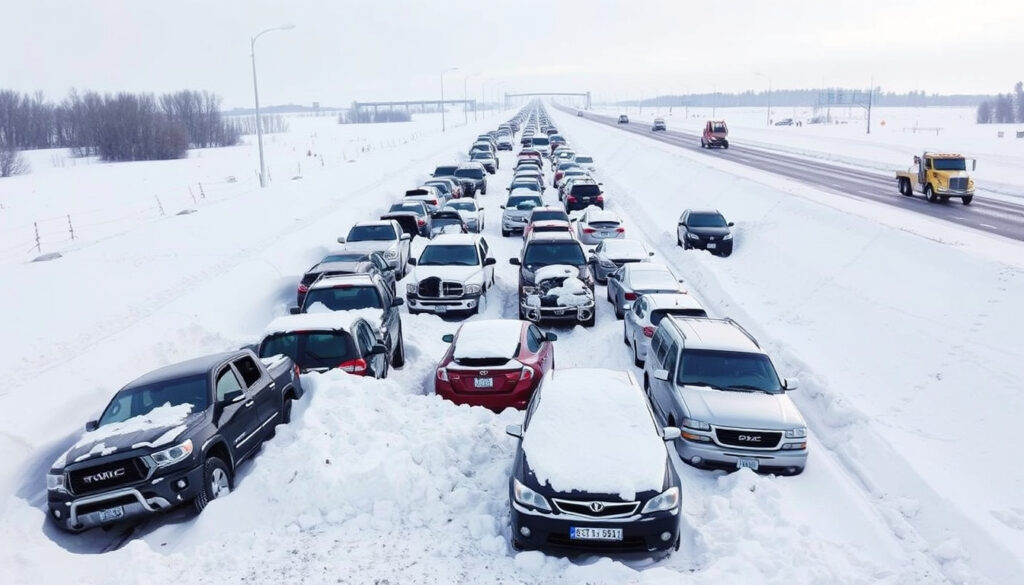
Getting stranded during a winter storm is stressful enough. But what happens when conditions deteriorate so badly that you have to abandon your vehicle entirely — and then figure out what comes next? Recent blizzards in Ontario and Ohio have turned that question into a real crisis for hundreds of drivers, with tow trucks overwhelmed, vehicles buried under snow drifts, and owners left wondering about retrieval timelines, costs, and insurance implications. Here’s what the recent incidents reveal about the process — and what you should know if bad weather catches you on the road.
Vehicles Abandoned in Ontario Blizzard: 150 · Tow Wait Time Morning After Tagging (Ohio): 3 hours → 1 hour · Deadliest Blizzard Recorded: 1972 Iran Blizzard · Highway Impacted in Ontario: Highway 402 · Insurance Risk for Abandonment: Policy invalidation possible
Quick snapshot
- 150 vehicles abandoned on Highway 402 in Ontario (The Weather Network)
- OPP received roughly 400 calls during the weather event (The Weather Network)
- Universal abandonment timelines across jurisdictions — rules vary by state and province
- Insurance coverage variations — policies differ by provider and circumstance
- Ontario Highway 402 incident: weekend blizzard with 150 abandonments
- Central Ohio towing overload: 100 calls on Sunday alone, wait times falling from 3 hours to 1 hour
- Vehicles tagged by police typically face 48-hour tow windows in many jurisdictions
- Owners must contact impound lots or police non-emergency lines to initiate retrieval
The following table summarizes the key data points from recent storm incidents across multiple jurisdictions.
| Detail | Value |
|---|---|
| Ontario Blizzard Abandonments | 150 vehicles on Highway 402 |
| Ohio Tow Policy | Tag then 48 hours |
| UK Storm Warning | Insurance invalidation risk |
| Deadliest Blizzard | 1972 Iran |
| Central Ohio Towing Calls | ~100 on Sunday alone |
| Ohio Morning Wait Time | 3 hours |
| Ohio Afternoon Wait Time | 1 hour |
| OPP Safety Recommendation | Stay in vehicle if stranded |
Who Do I Call About an Abandoned Car Near Me?
The answer depends on where you are and who has jurisdiction over the road. In cities, parking violations bureaus handle most abandoned vehicle reports. For vehicles stranded on highways or county roads, local police non-emergency lines are the appropriate first contact.
Local parking violations bureau
Urban areas typically have dedicated parking enforcement units. For example, Los Angeles residents contact the Parking Violations Bureau to report vehicles that have been stationary for extended periods. These reports usually trigger an inspection and, if the vehicle qualifies, eventual removal.
Police non-emergency line
For roadside abandonments during or after storms, calling the non-emergency police line is standard practice. Officers can log the location, check for any outstanding alerts tied to the vehicle, and coordinate with towing services if needed. The Weather Network reports that OPP handled roughly 400 calls during the recent Ontario blizzard, with officers tracking abandoned vehicles alongside active safety responses.
The implication: if your car is on a public road and you cannot return to it safely, file a report immediately. This creates an official record that protects you if the vehicle is later moved, damaged, or catalogued for impound.
What Happens If Your Car Is Towed Away?
When conditions force drivers to leave vehicles, law enforcement or municipal crews may tag them before removal. The process varies by location, but follows a general sequence: marking, inspection, and impoundment.
Tagging and inspection process
Police officers typically mark vehicles with a tag if owners are unreachable or if the vehicle poses a hazard. In Central Ohio, towing companies were overwhelmed post-storm — one company received around 100 calls on Sunday alone, according to local reporting. Officers marked vehicles as they worked through the backlog, prioritizing those blocking lanes or creating visibility hazards.
Owner notification and retrieval
Once a vehicle is tagged, owners usually have a window — often 48 hours in many jurisdictions — before it is towed to an impound lot. To retrieve it, owners must contact the impound facility directly with proof of ownership and typically pay towing and storage fees. In Ontario, OPP recommends that stranded motorists stay in their vehicles when possible, making it easier to authorize release when help arrives.
What this means: if your vehicle is tagged, do not assume it will remain where you left it. Contact the number on the tag or call the local non-emergency police line to locate it before the tow window closes.
How Long Before a Vehicle Is Considered Abandoned in Georgia?
State abandonment laws differ significantly, and Georgia is no exception. Understanding local rules matters because what qualifies as abandonment in one jurisdiction may not apply in another.
State-specific timelines
Georgia law considers a vehicle abandoned if it remains on public property for a specified period without registration or visible ownership markers. The clock starts when the vehicle is tagged — but the tagging process itself can take time during high-volume storm events. In Ohio, towing companies reported initial wait times of 3 hours the morning after the storm, dropping to within 1 hour by afternoon as crews caught up.
Winter storm exceptions
Many states recognize storm conditions as extenuating circumstances. Officers may extend timelines or delay tagging if conditions make retrieval unsafe or impossible. However, these exceptions are not guaranteed and often depend on local policy at the time.
The catch: storm-related exceptions can create confusion about rights and obligations. An owner who assumes their vehicle is protected may discover it has been towed once conditions improve and crews have caught up.
Where to Report for Illegal Parking?
Storm-related parking violations fall under different authorities than standard enforcement, but the reporting channels overlap.
Local transport authorities
Municipal transport or public works departments often manage road clearance and vehicle removal during weather emergencies. Reporting a vehicle obstructing plow routes or emergency access to these authorities can accelerate response. In Ontario, heavy winds created massive snow drifts that almost completely buried some stranded vehicles while motorists were still inside — blocking not just traffic but rescue paths.
Storm-related reporting
For vehicles blocking highways or creating hazards during active weather, police dispatch remains the fastest route. Officers can coordinate with both transport authorities and towing services to prioritize removal. OPP’s advice for Ontario winter travel includes having a full tank of gas, a charged phone, snacks, and warm clothing — steps that also reduce the likelihood of becoming a blocking hazard.
Why this matters: blocking plow routes or emergency lanes during a storm can result in fines independent of abandonment charges. Reporting such vehicles protects both the reporting individual and the broader community.
Which Is the Safest Place to Be During a Winter Storm?
The safest place during an active winter storm is indoors or in a designated shelter. When driving has already occurred and conditions deteriorate, decisions become about minimizing harm.
Avoiding vehicle abandonment
OPP recommends checking road conditions before departing during winter storms — a step that prevents situations where abandonment becomes necessary. For those already on the road, staying with the vehicle is generally advised until help arrives. OPP explicitly states that stranded motorists should remain in their vehicles, as this provides the best protection against exposure and makes them easier for rescuers to locate.
Home or shelter priorities
If conditions allow departure safely, reaching a home or public shelter is the next priority. For those who cannot, running the vehicle for warmth is an option — but with a critical caveat: clear the tailpipe of snow to avoid carbon monoxide buildup. OPP includes this warning in their winter safety guidance, noting it as a key hazard for stranded drivers.
For drivers caught in severe storms, the choice is stark: stay with the vehicle and manage hazards, or risk exposure, disorientation, and longer wait times for rescue in an unfamiliar location.
Timeline of Recent Winter Storm Vehicle Incidents
Three recent storm events illustrate the range of abandonment and recovery scenarios drivers currently face.
The timeline below traces the progression of incidents across multiple regions, showing how vehicle abandonments cluster during severe weather events.
| Date | Location | Event |
|---|---|---|
| February 8, 2026 | Ontario (Highway 402) | Weekend blizzard strands 150 vehicles on Highway 402 in Lambton and Middlesex counties |
| January 27, 2026 | Central Ohio | Winter Storm Fern prompts hundreds of towing calls; wait times fall from 3 hours to 1 hour |
| January 9, 2026 | United Kingdom | Storm Goretti brings insurance warnings about vehicle abandonment risks |
| 1972 | Iran | Iran Blizzard — deadliest recorded winter storm in history |
The pattern: major abandonment events occur in waves — first during the storm itself, then during the clearance and recovery phase. Ontario’s 150 vehicles on Highway 402 were tracked precisely by OPP, while Ohio’s event generated hundreds of towing calls without a confirmed abandonment count. The difference reflects how different jurisdictions prioritize data collection.
Confirmed Facts vs. Unconfirmed Reports
High-confidence claims about recent winter storm vehicle abandonments come primarily from tier-1 and tier-2 sources, while some aspects of the process remain murky.
Confirmed
- 150 vehicles abandoned on Highway 402 in Ontario — tracked by OPP (The Weather Network)
- OPP received roughly 400 calls during the weather event (The Weather Network)
- Ohio towing company received around 100 calls on Sunday alone (YouTube (Towing companies swamped))
- Ohio towing wait times were around 3 hours morning after the storm, falling to 1 hour by afternoon (YouTube (Towing companies swamped))
- OPP safety tip: stay in vehicle if stranded (The Weather Network)
- Clear tailpipe of snow if running vehicle for warmth — carbon monoxide risk (The Weather Network)
Unclear
- Universal abandonment timelines across U.S. states and Canadian provinces — rules vary by jurisdiction
- Insurance coverage variations — policies differ by provider, with some warning that abandonment may invalidate coverage
- Confirmed abandoned vehicle count for Ohio during Storm Fern — only towing call volume is available
- Standardized towing costs across different regions following storm abandonments
Expert Perspectives on Storm Vehicle Abandonment
Police were aware of roughly 150 abandoned vehicles on Highway 402.
— Ontario Provincial Police, via The Weather Network
Last couple of days I spoke with one company who says they had around 100 calls on Sunday alone.
— Reporter covering Central Ohio storm response, via YouTube
OPP previously said they received roughly 400 calls at the time of the weather event.
— Ontario Provincial Police statement, via The Weather Network
The recent Ontario and Ohio storms reveal a gap in how different regions track and manage vehicle abandonments during emergencies. Ontario’s OPP maintained precise counts — 150 abandoned vehicles, 400 total calls — while Ohio focused on towing volume without confirming an abandonment figure. For drivers, the practical consequence is uncertainty: without a clear count, it is harder to know how many others face the same retrieval challenges, and harder to gauge whether local resources will meet demand.
Insurance providers have flagged that abandoning a vehicle during a storm may affect coverage. Policies often contain clauses that void protection if a vehicle is left unattended for extended periods without notification. Drivers should document any storm-related abandonment with police reports and contact their insurer promptly to avoid disputes during the claims process.
Related reading: Avertissement Jaune – Vent – 90 km/h Gusts in Matane · Thunder Bay to Winnipeg – Distance, Drive Time, Flights & Bus
Ontario blizzards have stranded drivers much like the Toronto GTA winter storm that dumped record snow on Toronto, overwhelming roads and plows alike.
Frequently asked questions
Can you leave your car during a blizzard?
Leaving your vehicle during an active blizzard is generally discouraged. OPP recommends staying in the vehicle if stranded, as it provides shelter, visibility for rescuers, and protection against exposure. If you must leave — for example, if the vehicle catches fire or carbon monoxide becomes an issue — move as far from the road as possible and seek shelter immediately.
What to do before abandoning a vehicle in snow?
If abandonment becomes unavoidable, take these steps: leave the vehicle accessible for rescue, avoid blocking traffic lanes, and note the exact location. Contact police non-emergency lines to report the abandoned vehicle. If possible, leave a note inside the car with your contact information and the reason for abandonment.
How to find a towed car after a storm?
Call the local non-emergency police line and provide the vehicle’s location, license plate, and description. Officers can check whether the vehicle was tagged or towed. If it was moved to an impound lot, the facility will require proof of ownership and payment of towing and storage fees before release.
Does abandoning a car affect insurance?
Possibly. Some insurance policies contain clauses that limit coverage for vehicles left unattended in hazardous conditions. Contact your insurer after any storm-related abandonment to inform them of the circumstances. Documentation from police or tow reports supports your case if a dispute arises later.
Are there fines for storm-related abandonments?
Yes, in many jurisdictions. Fines may apply if an abandoned vehicle blocks plow routes, emergency lanes, or visibility zones — independent of standard abandonment fees. The risk is higher in urban areas where clearance operations are time-sensitive.
What helps prevent vehicle abandonment?
Preparation reduces the likelihood: check road conditions before departure, keep a full tank of gas, carry a charged phone and portable charger, and stock warm clothing and snacks. OPP recommends all of these for winter travel in Ontario. If conditions deteriorate while driving, pull over safely rather than pushing forward into worsening weather.
How do communities help stranded drivers?
In rural Ontario, snowmobilers and farmers assisted stranded motorists when tow trucks could not reach them due to blizzard conditions. These community responses are valuable but not guaranteed — drivers should not rely on them as a backup plan. The primary strategy remains preventing the situation through preparation and early decision-making.
More related posts
 En Direct de l’Univers – Meaning, Origin and TV Facts
 150 lbs to kg | Convert 150 Pounds to 68.04 kg
 IIHF Semifinals Referee Change – Key Facts and Impact
 Cast of The Conners: Full List, Changes and Updates
 Does Mark Carney Have Children – Verified Family Details
 Earls Kitchen and Bar Calgary Reviews – Ratings for Every Location
 Chalet à Vendre Bord de l’Eau Reprise de Finance – Quebec Waterfront Financing Guide
 1 Cup Sugar in Grams: Accurate Baking Conversion Chart
