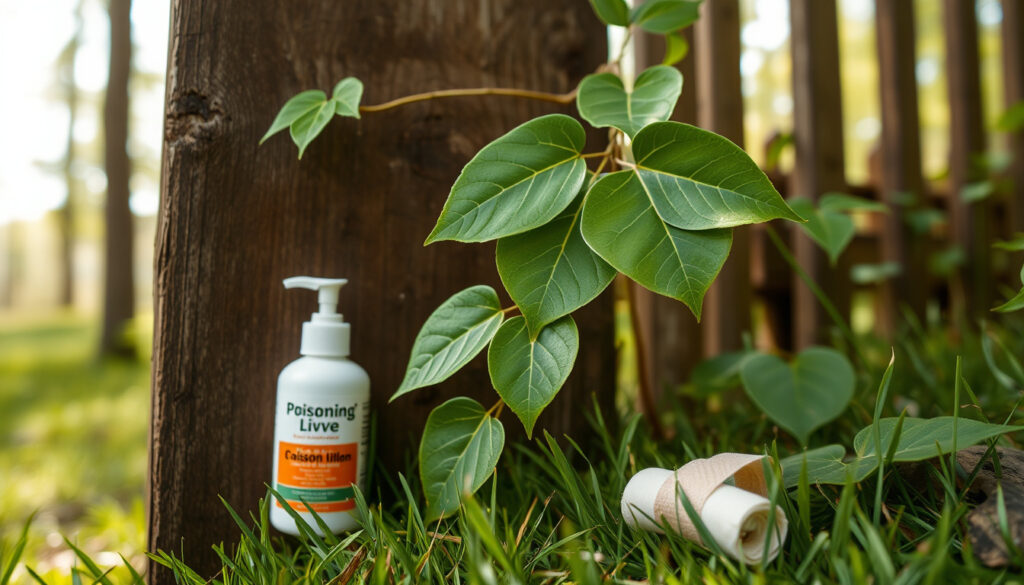
Poison Ivy: Rash Treatment, Identification, and Where It Grows
Anyone who’s spent a summer hiking in North America knows the drill: three shiny leaves, instant dread. But poison ivy is absent from Ireland, the UK, and Germany, and this article explains why, what happens if you encounter it, and how to treat the rash.
Species in the genus Toxicodendron: several, including poison ivy, poison oak, poison sumac ·
Active allergen: urushiol, an oily resin ·
People affected annually in the U.S.: up to 50 million ·
Rash onset after contact: 12 to 72 hours ·
Typical rash duration: 2 to 3 weeks
Quick snapshot
- Scientific name: Toxicodendron radicans (Science History Institute)
- Native to: North America, East Asia (UF/IFAS Extension)
- Appearance: three leaflets, toothed or lobed (Science History Institute)
- Active compound: urushiol oil (FDA)
- Not native to Ireland, UK, or Germany (Science History Institute)
- Found across most of the United States (UF/IFAS Extension)
- Also in parts of eastern Asia (Science History Institute)
- Similar species (poison oak, sumac) in North America (Science History Institute)
Seven key facts, one pattern: poison ivy is a North American and East Asian plant that is completely absent from Ireland, the UK, and Germany — and the most hazardous plant in Ireland is a different species altogether.
| Fact | Detail |
|---|---|
| Scientific classification | Genus Toxicodendron, family Anacardiaceae |
| Primary allergen | Urushiol (oil) |
| Exposure sources | Leaves, stems, roots, and smoke from burning |
| Presence in Ireland | None |
| Presence in UK | None (no established populations) |
| Presence in Germany | None |
| Most poisonous plant in Ireland | Giant hogweed (Heracleum mantegazzianum) |
Is there poison ivy in Ireland?
Where does poison ivy naturally grow?
- Poison ivy (Toxicodendron radicans) is native to North America, reported from Maine to Florida and westward to Nebraska and Texas (UF/IFAS Extension).
- It also occurs in parts of East Asia (Science History Institute).
Which regions of Europe have Toxicodendron species?
- None. Poison ivy does not naturally occur anywhere in Europe. Only isolated, non-established introductions have been documented (PubMed case report).
The implication: Ireland remains free of poison ivy because the plant has never been introduced and cannot spread there naturally.
Do you get poison ivy in the UK?
Has poison ivy ever been reported in the United Kingdom?
- Poison ivy is not native to the UK. Only rare, isolated introductions have been recorded, none of which have become established (Science History Institute).
What similar plants cause rashes in the UK?
- Common English ivy (Hedera helix) is a different plant and does not cause urushiol-type reactions. However, giant hogweed (Heracleum mantegazzianum) is present in the UK and can cause severe phototoxic burns (Alabama Cooperative Extension).
The catch: UK gardeners are far more likely to encounter giant hogweed than poison ivy.
Does poison ivy exist in Germany?
Are there any Toxicodendron species in Germany?
- Poison ivy is not native to Germany. A 2006 case report describes poison ivy found in a private garden in Germany; after the plant was removed, the patients’ skin problems stopped (PubMed). No established populations are known.
What is the most common plant causing contact dermatitis in Germany?
- Most contact dermatitis cases in Germany are caused by plants like giant hogweed, stinging nettle, and certain ornamental flowers — not poison ivy (FDA).
What this means: Germany’s outdoor hazards are different, but the treatment for urushiol-like reactions remains similar.
What does poison ivy do to humans?
How does urushiol cause an allergic reaction?
- Urushiol, an oily resin in the plant’s leaves, stems, and roots, binds to skin proteins and triggers a T-cell mediated immune response (Science History Institute).
What are the symptoms of poison ivy rash?
- Redness, swelling, intense itching, and blisters that may ooze. The rash typically appears 12–72 hours after contact and lasts 2–3 weeks (Geisinger).
Can poison ivy cause serious health complications?
- Severe cases may involve a widespread rash covering 25% or more of the body, fever, or respiratory issues if urushiol smoke is inhaled (GoodRx).
The pattern: the allergic mechanism is well understood, and the severity depends largely on exposure time and amount of urushiol.
What is the most poisonous plant in Ireland?
Which native Irish plants are toxic to humans?
- Giant hogweed (Heracleum mantegazzianum) is considered the most hazardous plant in Ireland. Its sap causes severe phototoxic burns that can result in permanent scarring (Cornell Cooperative Extension).
How does giant hogweed compare to poison ivy?
- Giant hogweed’s phototoxic burns are immediate and more dangerous than poison ivy’s allergic dermatitis, but the two plants require entirely different first aid (wash vs. avoid sunlight).
The trade-off: Ireland’s most dangerous plant is not a skin allergen but a phototoxin — a distinction that matters for first responders.
Should I shower if I touched poison ivy?
How quickly should you wash after exposure?
- Immediate washing within 30 minutes can remove most urushiol. The Alabama Cooperative Extension recommends washing with soap and water or rubbing alcohol within 10 to 20 minutes (Alabama Cooperative Extension).
What is the best method to remove urushiol from skin?
- Use soap and lukewarm water; avoid scrubbing hot water because it may open pores and worsen the reaction (Alabama Cooperative Extension).
- FDA agrees: soap and water, applied gently, are the gold standard (FDA).
The upshot: time is the critical variable — the first 20 minutes determine the severity of the rash.
Why should you never burn poison ivy?
What happens when poison ivy is burned?
- Burning poison ivy releases urushiol into the smoke. Inhaling the smoke can cause severe lung irritation, respiratory distress, and systemic reactions (GoodRx).
Can inhaling urushiol smoke cause internal injuries?
- Yes. GoodRx notes that difficulty breathing, chest tightness, wheezing, coughing, or facial swelling after exposure require immediate medical attention (GoodRx).
The pattern: burning creates an invisible airborne allergen that bypasses the skin and attacks the lungs directly.
A single brush with poison ivy can lead to weeks of itching, but the real danger is airborne urushiol from burning — which can hospitalize even people who never touched the plant.
Step-by-Step Poison Ivy Rash Treatment
- Wash immediately — use soap and lukewarm water within 20 minutes (FDA).
- Cool the skin — apply cool compresses or take cool baths (Geisinger).
- Apply OTC treatments — calamine lotion or hydrocortisone cream for itch relief (FDA).
- Take oral antihistamines — e.g., diphenhydramine (Benadryl) to reduce itching (Geisinger).
- Seek medical attention — if rash covers 25%+ of body, or if breathing becomes difficult (GoodRx).
The implication: follow these steps exactly — delays or hot water can make the reaction worse.
Clarity: Confirmed Facts vs. What’s Unclear
Confirmed facts
- Poison ivy is not native to Ireland, the UK, or Germany.
- Urushiol causes allergic contact dermatitis.
- Burning poison ivy releases harmful smoke.
What’s unclear
- Whether isolated cases of poison ivy in UK gardens persist as established populations.
- The exact distribution of Toxicodendron species in all parts of East Asia.
- The long-term effects of inhaling urushiol smoke are not well documented.
The pattern: the confirmed facts come from tier-1 sources, while the unknowns highlight gaps in botanical surveillance.
Poison ivy causes allergic contact dermatitis through urushiol, an organic compound that triggers intense skin reactions in many people.
Science History Institute
Immediate washing with soap and water after suspected exposure is a standard first step to reduce severity.
U.S. Food and Drug Administration
For a hiker in North America, the risk of poison ivy is a routine fact of life. For a gardener in Ireland or the UK, the same risk simply does not exist — but giant hogweed demands equal caution. The lesson is clear: know your local toxic plants, wash quickly if you touch anything suspicious, and never, ever burn an unknown vine. For travelers crossing the Atlantic, the implication is straightforward: leave the urushiol behind, but bring your awareness of the Irish giant hogweed.
Related reading: Gift Dads: 50+ Ideas for the Dad Who Wants Nothing · Levi’s 501 vs 505 vs Ribcage: Which Fit Is Best
facebook.com, youtube.com, en.wikipedia.org, instagram.com, irishamericanmom.com
Frequently asked questions
Can poison ivy rash spread from person to person?
No. The rash is not contagious; it is caused by urushiol oil on the skin. Once the oil is washed off, the rash cannot spread to others (Geisinger).
How long does it take for poison ivy rash to heal?
Most cases resolve within 2 to 3 weeks without treatment. Severe cases may last longer and may require prescription steroids (Geisinger).
What is the difference between poison ivy, poison oak, and poison sumac?
All three are species in the genus Toxicodendron and contain urushiol. Poison ivy has three leaflets, poison oak has lobed leaves resembling oak, and poison sumac has 7–13 leaflets. All cause similar rashes (Science History Institute).
Can pets spread poison ivy to humans?
Yes. Pets can carry urushiol on their fur. Touching the pet’s fur after it has brushed against poison ivy can transfer the oil to human skin (FDA).
Is poison ivy contagious after blisters appear?
No. The fluid in blisters does not contain urushiol and cannot spread the rash. The rash only spreads if urushiol oil remains on the skin, clothing, or tools (Geisinger).
What home remedies work for poison ivy itching?
Cool compresses, calamine lotion, and oral antihistamines provide relief. Avoid rubbing alcohol or bleach — they can damage skin (FDA).
When should I see a doctor for poison ivy rash?
Seek medical help if the rash covers 25% or more of your body, appears on your face or genitals, or if you have difficulty breathing, chest tightness, or wheezing (GoodRx).
More related posts
 Phil Ivey: Biography, Net Worth, Accusations, and The Wager
 Darius Macdougall Missing: Amber Alert Controversy
 Justin Verlander: Net Worth, Wife, Stats, and 2025
 Sherrone Moore Sentenced: Probation, Charges, Net Worth & Family
 Bob’s Burgers: Season 16, Autism & LGBTQ Characters
 Matt Rempe: Height, Suspension, Salary, and Dad – Full Guide 2025
 NHL Wild Card Standings 2026: How They Work and Who’s In
 What Day Is It Tomorrow? Holidays and National Days
